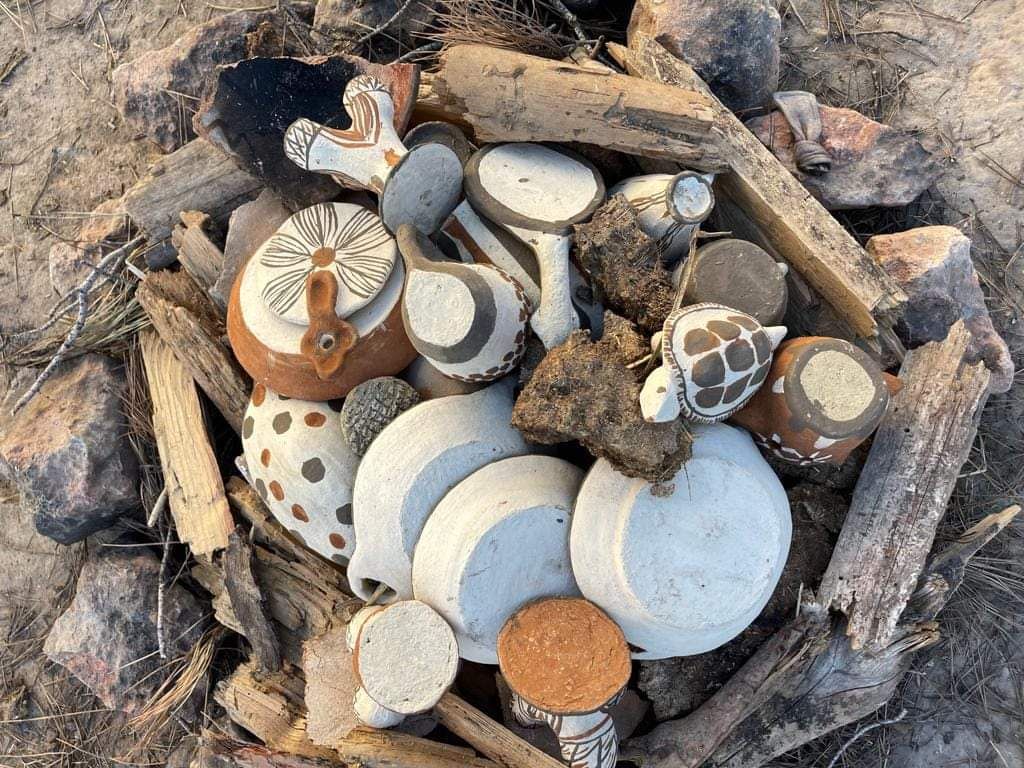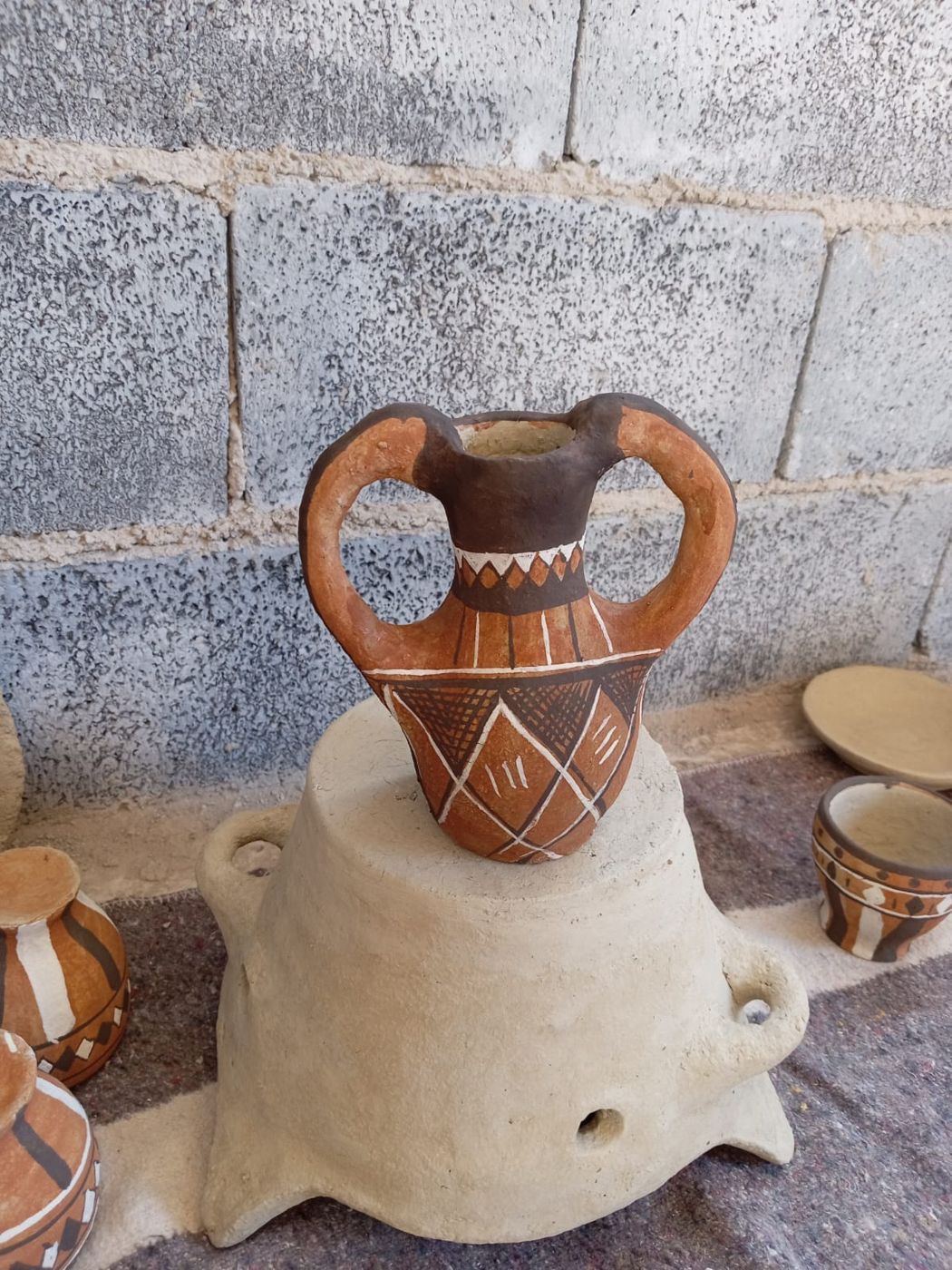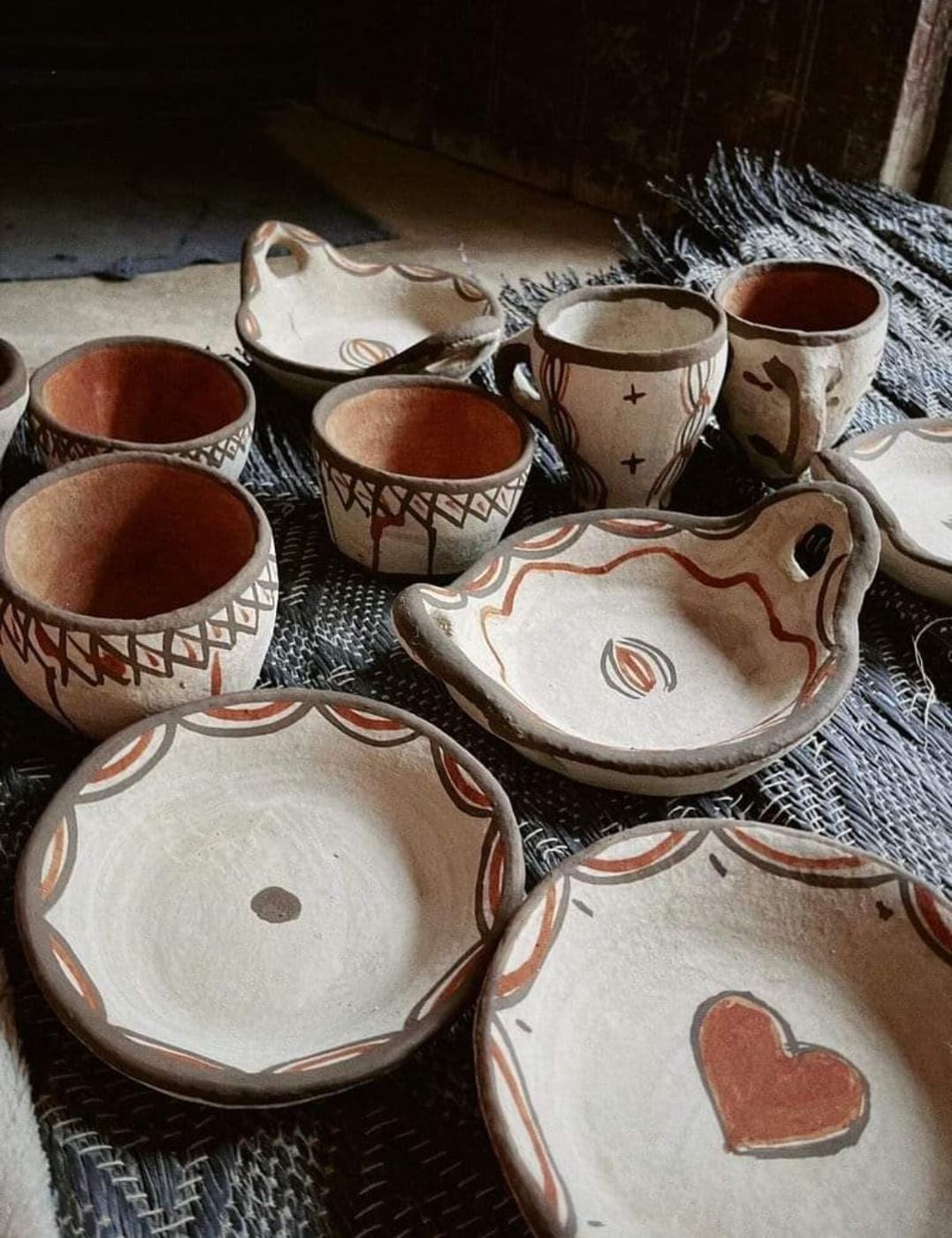
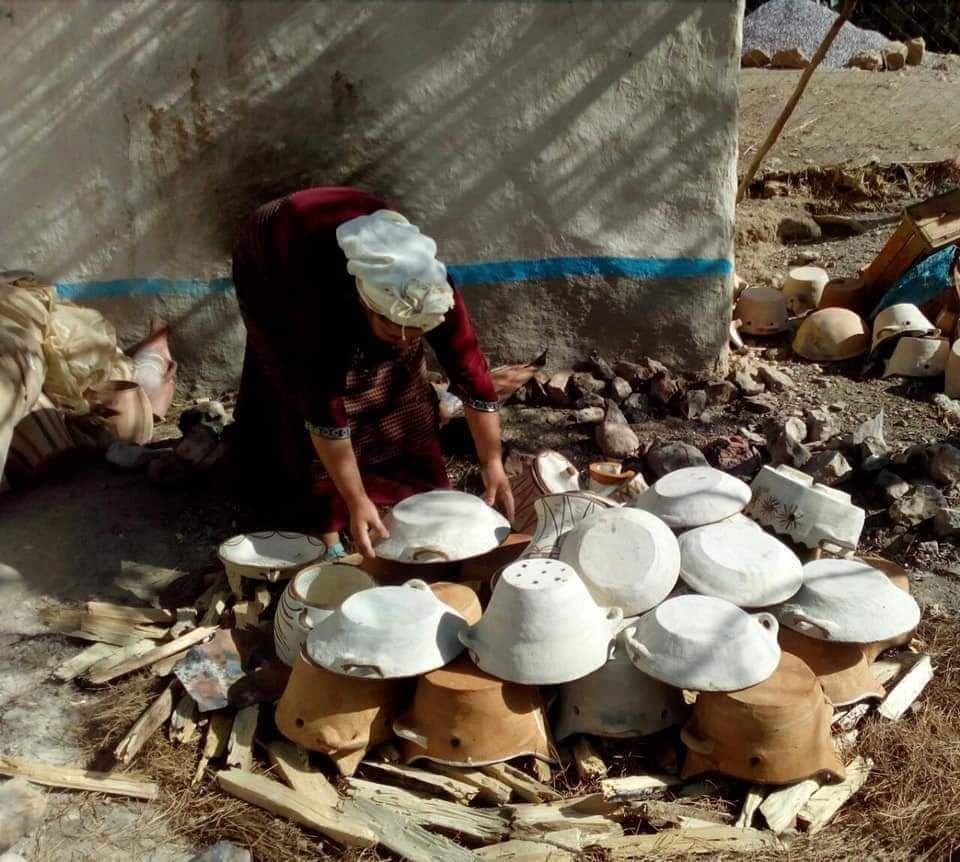
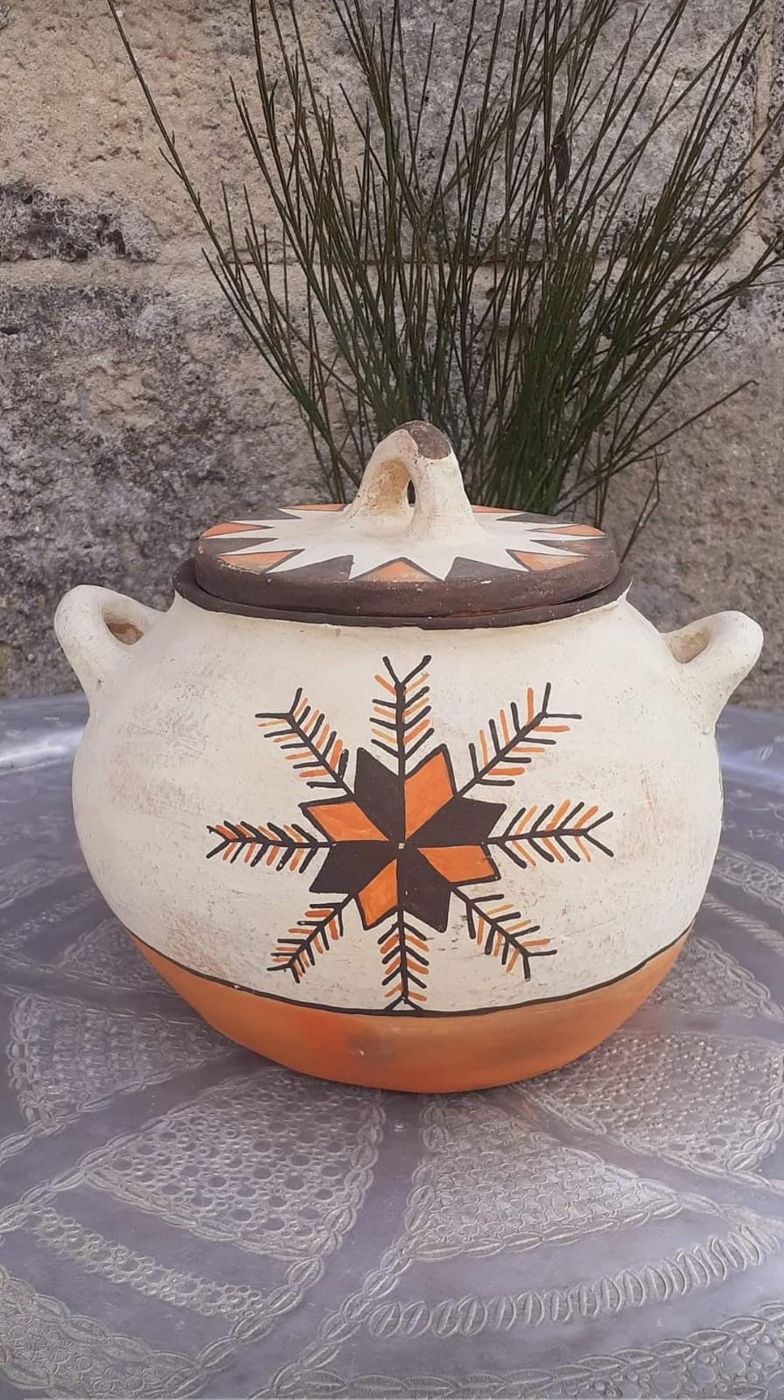
Hand-built bowls and plates painted with red and brown lines, laid on a woven mat A woman of the house stacking white pots on wood for an outdoor firing Lidded cooking pot with handles, painted with a brown and orange star
Douar of Ain Bouchrik · Taounate · Central Rif

Clay from the hill. A bed under the Rif.

A family pottery house in a small Rif village, about 110 km east of Fes. Learn the hand-built pottery that the women here have passed from mother to daughter, then sleep in our dormitory with the whole valley at your window.

A day at Dar Tin

From the clay pit to the evening fire

Days follow the light and the clay, not the clock. This is a typical full workshop day; we adapt it to the season and to you.

  • Breakfast on the terrace: msemen, olive oil from the village trees, honey, mint tea.
  • Walk to the clay. Learn to choose it, soak it and work it soft by hand and foot.
  • Shaping. Build your pot coil by coil, the way Tamo did.
  • Lunch with the family, and a long rest in the shade.
  • Polish with a smooth stone, then paint lines and triangles in red earth and black.
  • Walk up to the ridge for sunset over the valley.
  • Dinner from the clay pot: a tagine cooked slowly over charcoal.
Made here, by hand

Every piece is shaped, painted and fired in the douar
The landscape

Olive terraces, folded ridges, and a sky that changes all day

Midday over the olive terraces
Sunset from the ridge walk
The douar under the stars
We are just opening

Be one of our first guests

Dar Tin is a new family project. Our first guests get founding rates, a small group (never more than people at the clay), and a real say in how we grow.
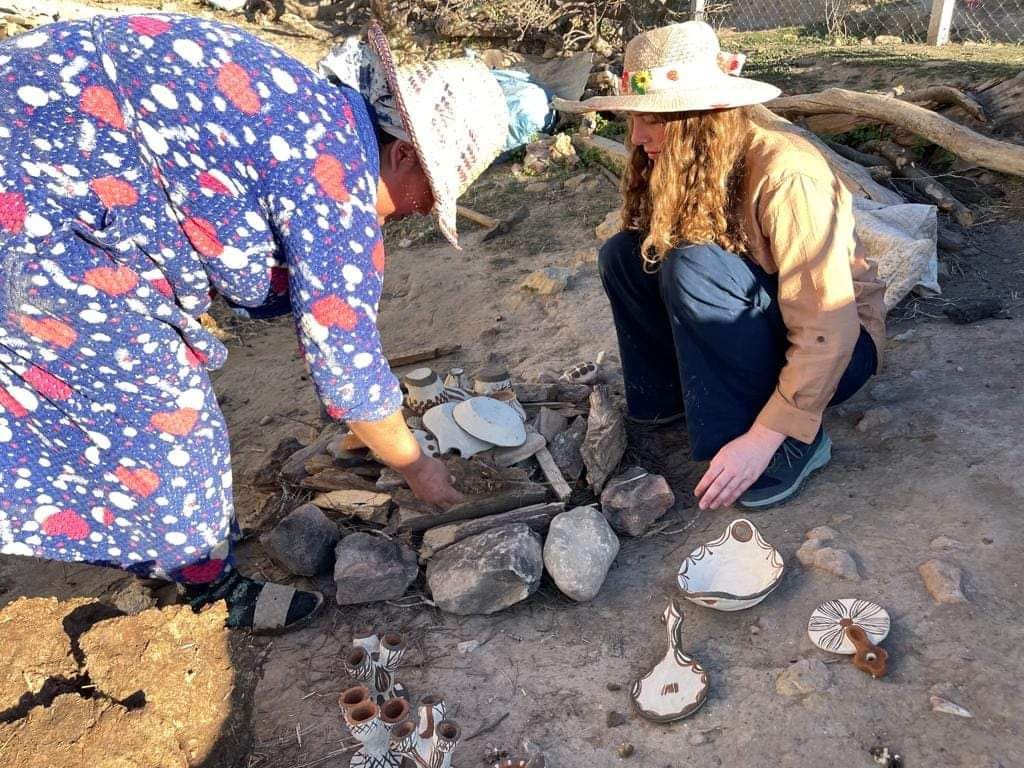
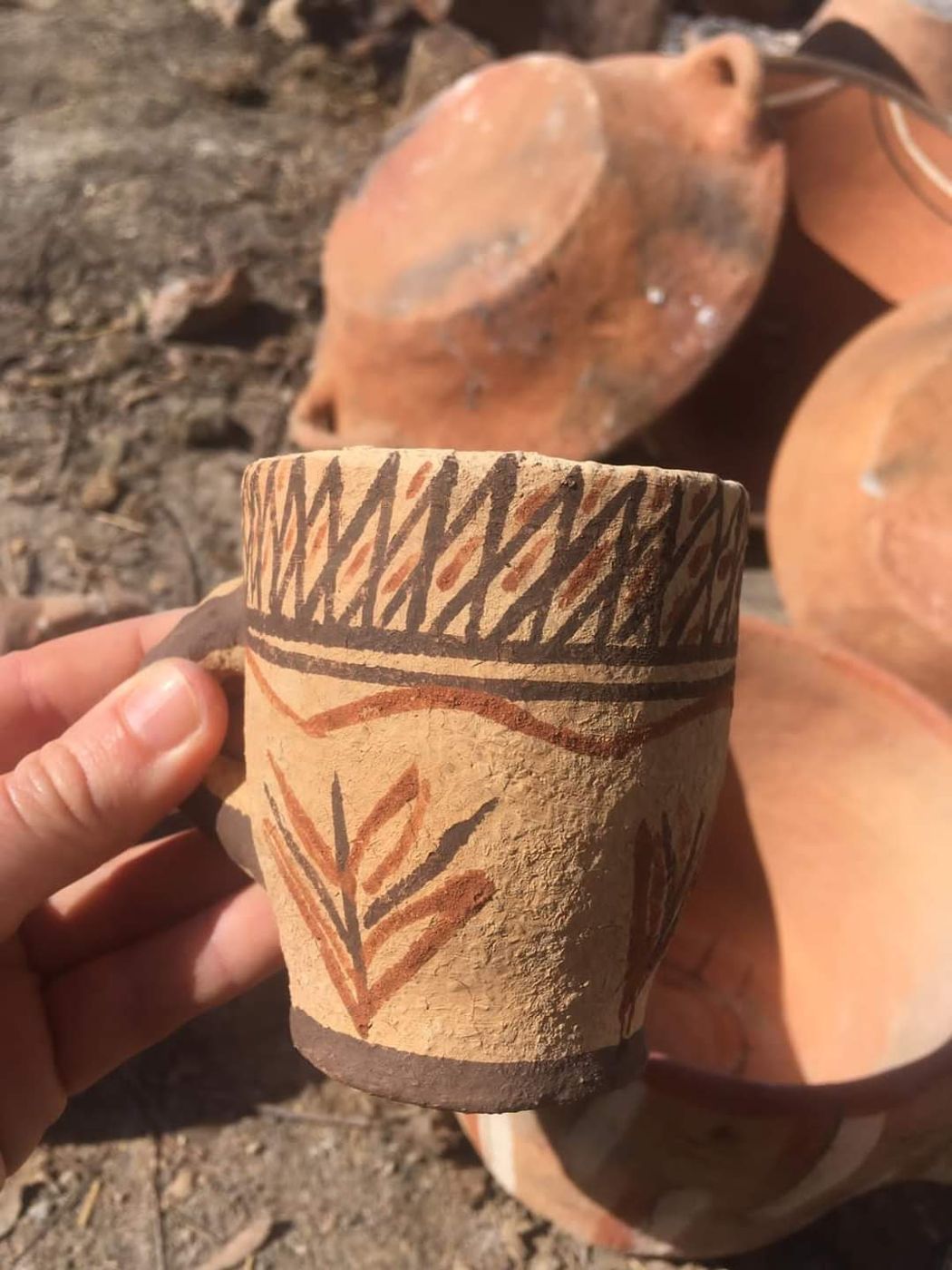
Our teacher and a guest setting painted pieces into the firing place A painted clay cup with zigzag and leaf patterns
The pottery course

Hand-built Rif pottery

The way it has been made in these hills for generations: by hand, without a wheel, fired outdoors.

What you will learn

Five stages, taught by the woman Tamo trained

  1. The earth

    Choosing clay on the hillside, drying, crushing, soaking and kneading it until it is ready.

  2. The shape

    Building a bowl, a water jug or a small tagine, coil by coil, turning the pot on a dish, not a wheel.

  3. The skin

    Scraping, smoothing, and burnishing with a pebble until the surface shines.

  4. The marks

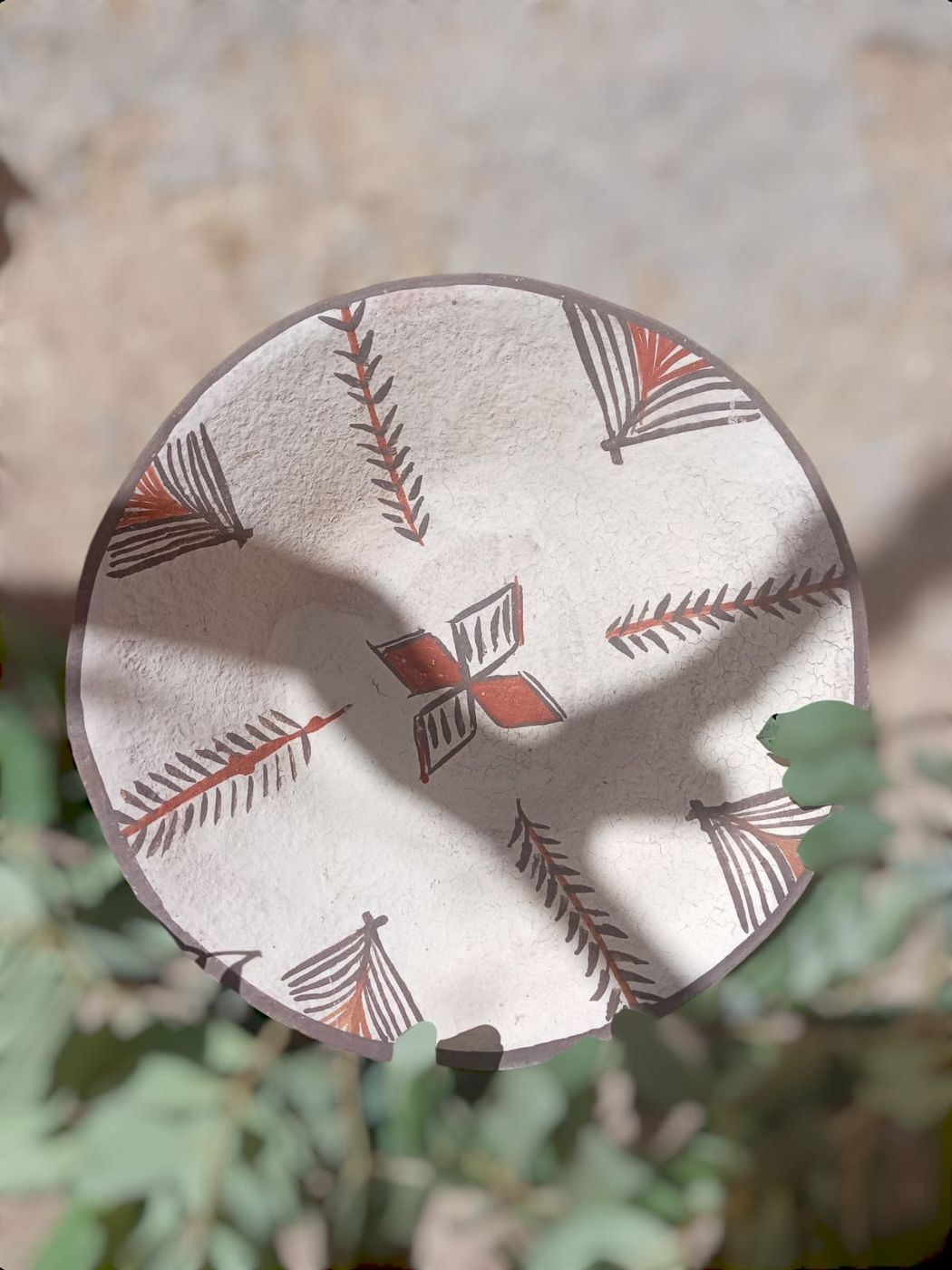
    Painting the region’s geometric patterns with natural red and dark pigments and a simple brush.

  5. The fire

    An open, wood-fed firing in the yard, and reading the colours as the pots cool.

Painted pieces arranged in wood before firing
Laying the pieces in wood and stone
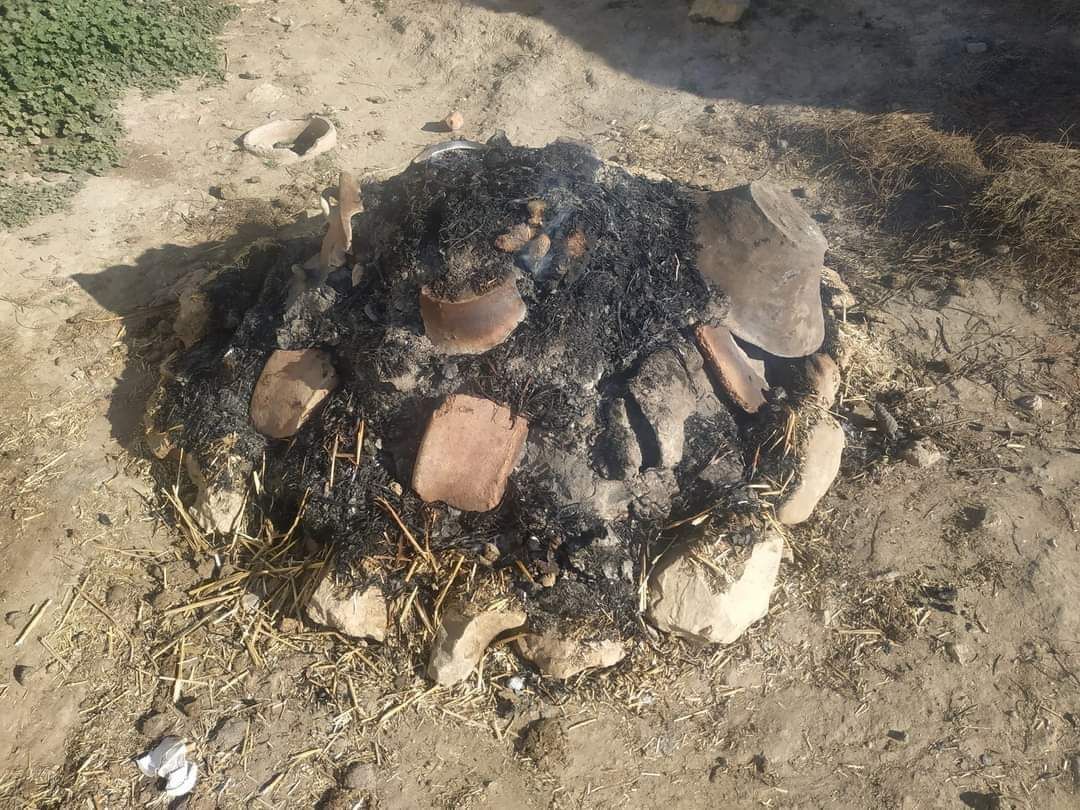
An outdoor firing mound covered in burnt straw and pot shards
Covered with straw and shards, left to burn
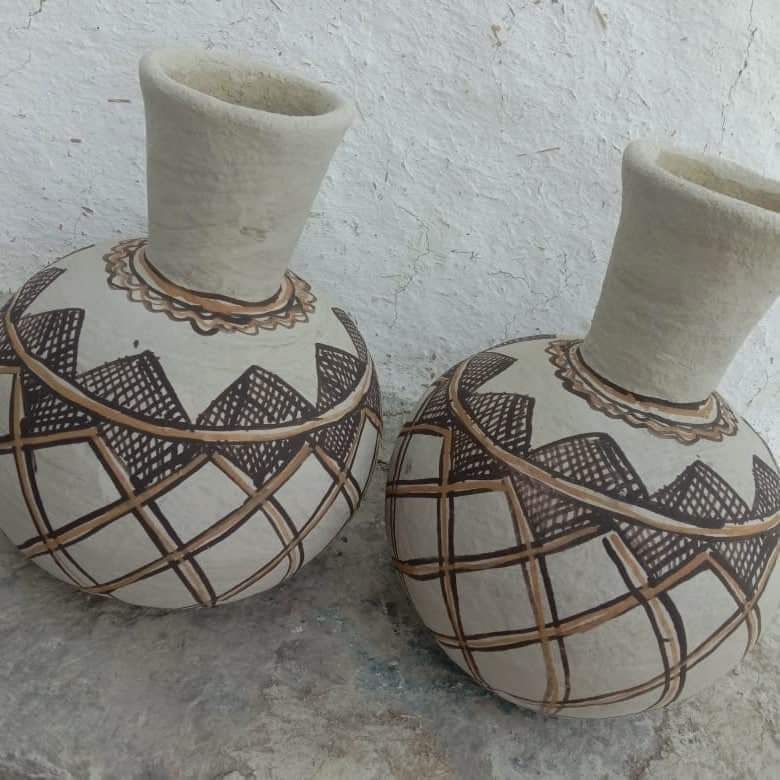
Two fired white jugs with cross-hatched patterns
What comes out the next morning
Formats & founding rates

Choose your time with the clay

Half-day taster

MAD / person
  • 3 hours, morning or afternoon
  • Shape and polish one small piece
  • Mint tea and something sweet

Full day

MAD / person
  • Clay pit to painting
  • Lunch with the family
  • Your piece joins the next firing
Best way to take a pot home

Clay & Stay, 3 nights

MAD / person
  • 3 nights in the dormitory, all meals
  • Two full workshop days
  • Fire your own pieces and leave with them

Why three nights? Hand-built pots must dry slowly for several days before they can meet the fire. On shorter visits we fire your piece later and keep it for you, or arrange to send it.

Good to know

Before you come

Do I need any experience?

None. Children from about 8 are welcome with a parent.

What should I wear?

Clothes that can get muddy, and closed shoes for the walk to the clay. We lend aprons.

Which languages?

Teaching is in Darija with help in French and English. Gestures do most of the work.

When is the best season?

Spring and autumn are mild and green. Summer afternoons are very hot, so we work early and late. Winter brings rain, and firings depend on dry days.

The white wall of the house with its blue stripe, pots drying in the yard
The dormitory

A bed in the douar

Simple, clean and shared, in a village house where the terrace looks over the whole valley.

MAD per bed, per night, breakfast included
single beds in one shared room
MAD for a home-cooked dinner
110 kmfrom Fes, at the foot of the central Rif
What you get

Everything you need, nothing you don’t

This is a family home, not a hotel. You live with the rhythm of the village: the call to prayer, the goats on the path, bread from the oven in the morning.

  • Beds & linen

    Single beds with fresh sheets, warm blankets for mountain nights, and a locker for your things.

  • Shared bathroom

    Hot shower, separate toilet, towels on request.

  • The terrace

    Breakfast, sunset and stars. The best room in the house.

  • Meals

    Breakfast is included. Lunch and dinner with the family on request, with vegetarian options.

Getting here

From Fes to the douar

  1. Fes to Ghafsai

    Grand taxi or bus north-east through Taounate, about two and a half hours.

  2. Ghafsai to Ain Bouchrik

    A short local taxi ride. Tell us your arrival time and we meet you.

  3. Or we pick you up

    We can arrange a driver from Fes. Ask when you book.

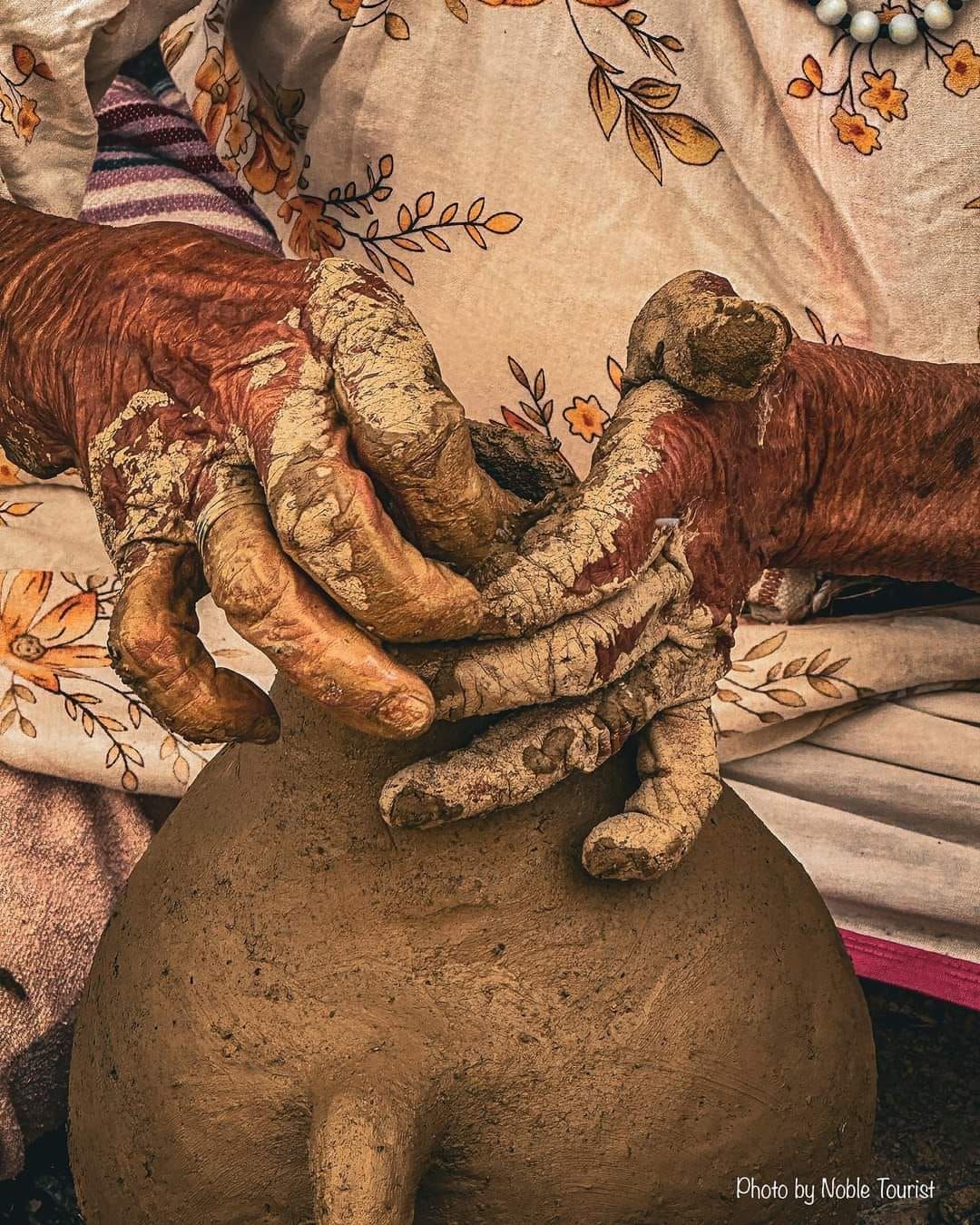
Old hands, stained with henna and clay, shaping the neck of a round pot
Hands that have shaped clay for a lifetime. Photo: Noble Tourist
The woman behind the clay Tamo تامو

One hundred years of clay

She lived a century in Ain Bouchrik. Before she left, she gave her craft to the wife of her son.

Tamo was born when the road from Fes was still a mule track, and she died a hundred years later in the same valley. In between, she never stopped making pots. Water jugs for the spring, bowls for the bread, the great jars that kept oil and grain through the winter. Half the kitchens in the douar held something shaped by her hands.

She learned as all the girls did, sitting next to her mother in the yard, rolling coils of clay too thick and too crooked until, one day, they were not. She never used a wheel. She said the wheel spins too fast for a pot to remember who made it.

When her son married, his young wife came to live in the house. Tamo watched her for a long time before she taught her anything. Then, season after season, she began to give her the secrets: where the good clay lies after the rains, how much crushed stone to fold into it, how to listen to a pot in the fire.

Today that daughter-in-law runs the workshop at Dar Tin. When she guides your hands on the clay, she is passing on what Tamo placed in hers.

One century, one craft

Each square is one year of Tamo’s life

Years making potsYears teaching her son’s wifeChildhood
“The clay does not belong to the hand that digs it. It belongs to the hand that learns to wait.”A saying Tamo repeated at the workshop
The secrets she passed on

What Tamo taught

Wait for the rain

الطين

Good clay is dug after the first autumn rains, when the earth is soft and the stones show themselves. Clay taken in a hurry cracks in the fire.

Feed the clay

العجن

Crushed old pottery and fine stone are folded into the wet clay so the pot can breathe in the flames. Tamo judged the mixture by hand alone, never by measure.

Build slowly

الصبر

Each coil must firm up before the next one goes on. A jar is built over days, in the shade, turned a little each morning.

Two-handled jug built by hand

Polish with a stone

الحجرة

Every potter keeps a smooth pebble from the river. Tamo’s was black and worn flat by decades of polishing. It is still in the workshop.

Polished white bowl painted with palm branches

Read the fire

النار

An open fire of wood and brush, watched from start to finish. The colour of the smoke, the sound of the pots: she knew when they were done without looking.

An outdoor firing mound under burnt straw
Booking

Ask for your dates on WhatsApp

We are a small family business, so we book personally. Fill in the form, press send, and your request opens in WhatsApp, ready to go. We reply within 24 hours.

  1. Send your request

    Pick what you want and your dates. Nothing is charged.

  2. We confirm

    We check the beds and the firing calendar, then reply with your plan.

  3. Hold your place

    A % deposit secures it, by bank transfer or money transfer. The rest is paid in cash on arrival.

  4. Free changes

    Move your dates for free up to 7 days before. Cancel earlier than that for a full refund of your deposit.

No WhatsApp? Call or message , or email .

What would you like?
Estimated total0 MAD